maxim88news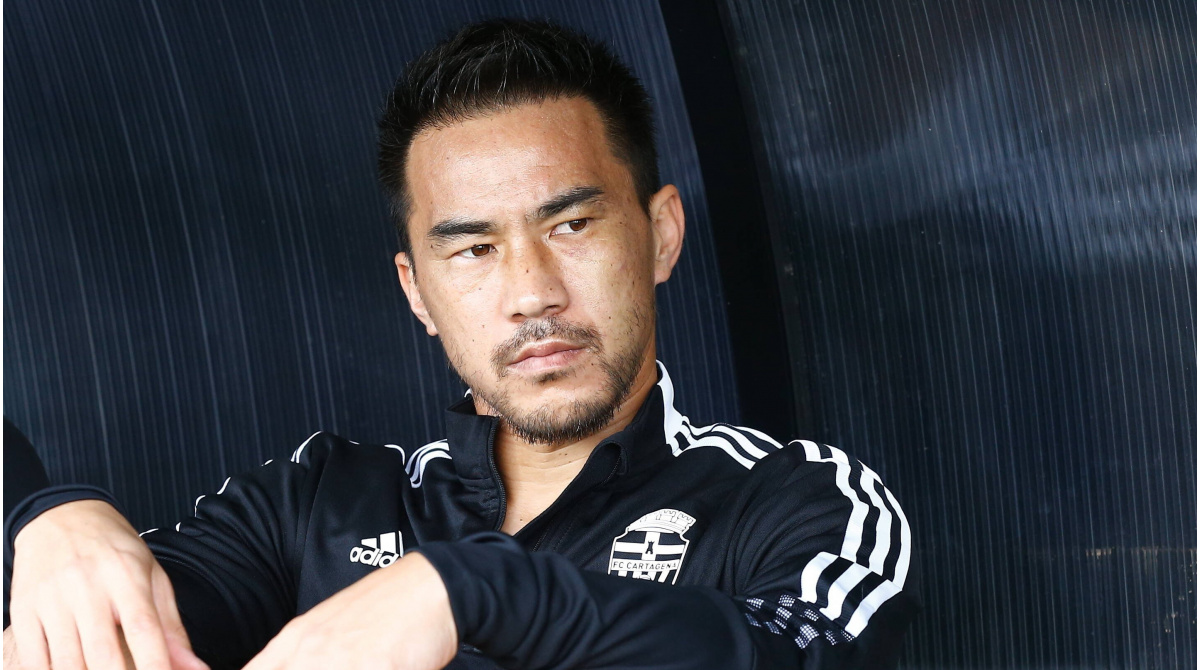
Exclusive interview

©IMAGO
In the summer of 2024, Shinji Okazaki retired from playing professional football, but stayed in the sport as head coach of German sixth division club Basara Mainz. There, the 38-year-old not only manages the sporting affairs, but is also the founder and owner of the club. In an interview with Transfermarkt, the former Mainz, Stuttgart and Leicester City star talks about the rather odd idea of founding a Japanese club in the heart of Germany, explains Basara’s success story and his hopes and dreams of taking Japan to the World Cup as an international manager.
Who are Basara Mainz? The Japanese club in German football
In the days before Japan had a professional football league, a few talented Japanese players sought their fortunes abroad, including in Germany. After the establishment of the J-League in 1992, professional football flourished in Japan, but the ambition to compete in South America or Europe remained strong among national team players. By the late 1990s and early 2000s, more Japanese players began appearing in Italy’s Serie A, the Dutch leagues, and the Bundesliga. Among them were stars like Makoto Hasebe, Shinji Kagawa, and Atsuto Uchida, who paved the way for others, including Okazaki. Over time, the number of young Japanese players tackling the challenges of Germany’s lower leagues also increased.
“When I moved from Stuttgart to Mainz in 2013, Takashi Yamashita (the president of Basara Mainz) was already in the city. Through his company, he was connecting with young Japanese players eager to gain footballing experience in Germany,” noted Okazaki. “However, he noticed that many players didn’t develop as much as expected. Some found opportunities to play, but when faced with tough conditions, they often blamed their environment or coach instead of taking responsibility for their growth. The cultural and practical differences between Japan and Germany were immense—not just in everyday life but on the pitch as well.”
Okazaki proposed a solution: “I suggested to Yamashita, ‘Why don’t we create our own team and develop Japanese players ourselves?’ He immediately agreed, saying, ‘Let’s do it!’ That’s how Basara was born,” Okazaki recalled after the match, his voice hoarse with emotion. Starting in the lowest tier of German football, the 11th division, Basara Mainz achieved five consecutive promotions. “The early days were tough,” recalls the former Premier League title winner. “It was constant trial and error. One of our founding members, Takuya Hidaka, scored 30 or 40 goals in a season single-handedly (laughs). Even so, winning the league in the 11th tier wasn’t easy. But we kept finishing first year after year. We’ve come this far thanks to so many people,” said Okazaki.
Using Basara to connect Japanese and German football
Now, six years after their promotion to the sixth division, Basara faces new challenges in pursuing a spot in the fifth tier, the Oberliga. To qualify, the club needs at least three youth teams of its own, among other requirements. Currently, Basara shares a youth setup with another club, Moguntia. “There are many hurdles beyond performance that we need to overcome to progress. That’s why we need to involve more people and clearly define what Basara stands for and what we aim to achieve,” Okazaki explained. As Basara marks its 10th anniversary, Okazaki wants to expand the club’s mission of developing Japanese players in Germany. “The core idea is to be a place for young Japanese players. But I also think we could send ambitious German players to Japanese teams or even to Belgium. I want Basara to be a stepping stone for players to try again elsewhere. It’s a concept that’s normal in Japan, but I’d like German players to make use of it too.”
Indeed, many young Japanese players continue to come to Germany to pursue their football dreams. Transfermarkt data shows that many Japanese players are active in Germany’s lower leagues. For example, the Verbandsliga Südwest, where Basara plays, features 12 Japanese players—11 of whom are with Basara. This unique culture of chasing dreams abroad, as Okazaki highlights, could become a two-way exchange, providing opportunities for European players to pursue professional careers in Japan.
Why lessons with Kante could guide Okazaki to the World Cup
Okazaki’s playing career, spanning Japan, Germany, England, Spain, and Belgium, has provided him with a wealth of experience and a valuable network. Reflecting on his journey, he said, “I’ve played alongside Germans, Spaniards, and many others. I often thought, ‘You might underestimate Japan, but you’d find it incredibly tough if you played there the same way you do here.’” He believes players in Germany’s fifth tier could thrive in Japan’s J3 League and that progressing through the Japanese leagues could open doors to Europe. “If you’re playing in Japan’s J1 League by the time you’re 23 or 24, you’ve got a shot at moving to the 2. Bundesliga or even the top flight.”
Okazaki sees Basara as a platform to nurture both Japanese players for the Bundesliga and German players for Japanese football. “I hope we can achieve something only we can do,” he said, speaking with the perspective of a manager and entrepreneur. Though still listed officially as Basara’s manager, Okazaki’s ultimate goal is to lead Japan’s national team to World Cup glory. He conducts training sessions in English and is working hard to improve his language skills, recalling his time learning English alongside Chelsea star N’Golo Kanté while he was playing at Leicester City. “As a player, I used to think you could show everything on the pitch without needing to speak much. But I’ve since realised how important language is, especially after my time in Spain.”
Okazaki is also pursuing his coaching licences, a process that requires dedication and time. “I recently spoke with [Alberto] Zaccheroni (former Japan national coach), who told me he started in Italy’s Serie D. That reassured me that I’m on the right path.” Asked about the steps needed to achieve his dream, Okazaki said, “It’s about how many challenges I can overcome. For example, I might now present my vision to small groups of people, but there could be a day when I’m addressing hundreds. A manager capable of winning the World Cup should be able to handle such situations with ease.” Okazaki’s approach to life has always been uniquely his own, shaped by his willingness to step into the unknown. “I don’t want to just earn a licence and coach in the J-League. I want to do things no one else has done, like competing in intense environments. The World Cup is my ultimate goal, and I’ll keep working toward it, even if it takes 10 or 20 years.” His vision is bold and ambitious, just as it was during his playing days. It will be fascinating to see how Shinji Okazaki leads Japan in the years to come, perhaps all the way to the World Cup stage.