maxim88news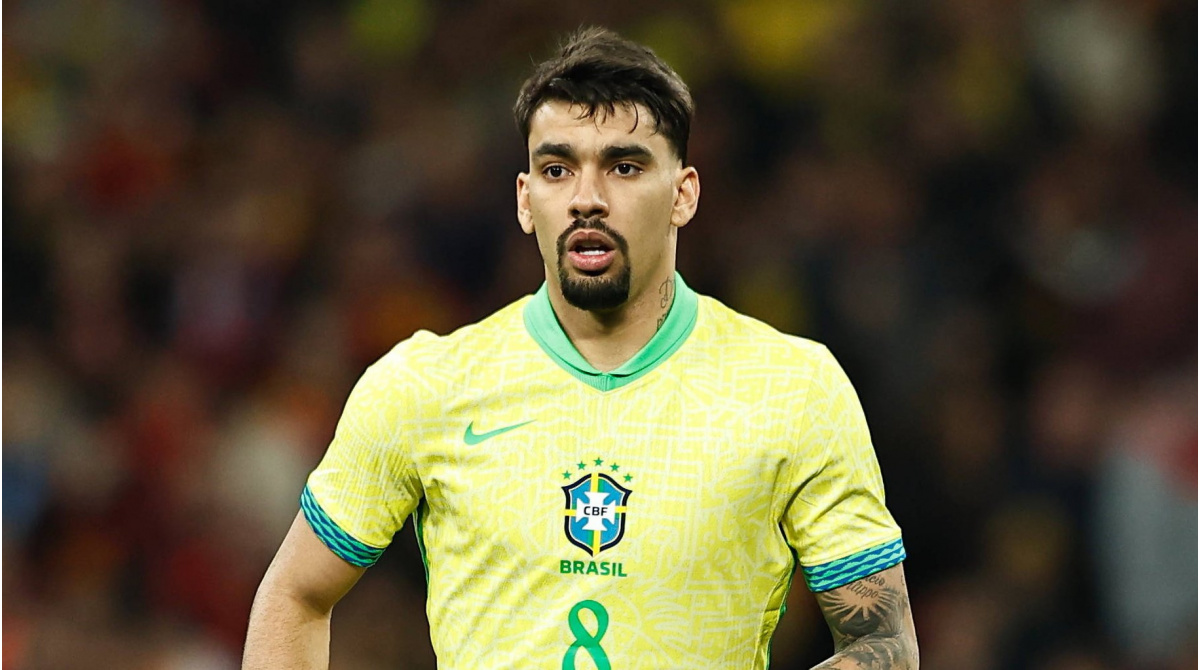
Paquetá to Flamengo?

©IMAGO
When it comes to the January transfer window, most football fans expect a period of intense negotiating and transfers dominated by the deep pockets of Premier League clubs. Few European top-flights can compete with the English top-flight and each start to the year tends to bring about an influx of players to the league, at the expense of all others. However, so far this year there is another league that has managed to rival the Premier League for money spent on new players. And it certainly isn’t another top European league or even the Saudi Pro League.
| Rumour | ||||||||||
|---|---|---|---|---|---|---|---|---|---|---|
 |
L. Paquetá |
 |
||||||||
| Attacking Midfield | ||||||||||
|
||||||||||

So far since the start of the year, the Campeonato Brasileiro Série A has spent an impressive sum of €110.3 million on new signings. Only the Premier League (€238m) has spent more than the Brazilian top-flight, with MLS (€91m) coming in third place. And it doesn’t seem as though Brazilian clubs will be stopping anytime soon. Due to the league running on an annual calendar, their current transfer window will run until the start of March, which means there’s plenty of time to sign more players. One such player could well be West Ham star Lucas Paquetá, who is reportedly edging towards a €40m move to Flamengo in what would be a record-breaking deal for a Brazilian club. So how much are Brazilian clubs spending and why have they suddenly gotten far busier in the transfer window?

While the money spent this month is notable on its own, it’s worth bearing in mind that the real eye-opening numbers can be found in the league’s spending in recent years. As we can see in the table above, the money spent by clubs in the Brazilian Série A has increased by 655% in the last five years, with the league spending €70m in 2021 and steadily increasing that sum to a remarkable €529m over the course of both transfer windows in 2025. While the Brazilian league doesn’t quite line up with the European calendar, that sum of money spent on new players would place the division sixth among its European counterparts, just €77.5m less than LaLiga spent last season.
“It’s clearly a power-move by Flamengo in the path of establishing dominance over South America, but also a transfer that could change the entire landscape of Brazilian football,” said Marcos Watts, Transfermarkt’s Area Manager for Brazil, when asked about the significance of Paquetá returning to his boyhood club. “It would be the fourth record-breaking deal since 2024, underlining a clear change in the role Brazil plays in the international market: Brasileirão clubs are more willing – and able – to invest heavily on transfers, driven by higher prize money, stronger media and sponsorship deals, improved governance and a growing international visibility of the league.”

As Watts notes, Brazilian clubs have managed to improve sponsorship deals and better governance with an already established ability to sell a remarkable number of players to Europe each and every year. Over the course of the last 10 years, the Brazilian top-flight has averaged €322m in player sales each year, with steady increase year on year from 2021 seeing income from player sales skyrocket from €192m in 2021 to an incredible €672m in 2025. In comparison, only three European leagues – Premier League (€1.81b), Serie A (€938m) and Ligue 1 (€916m) – made more money from player sales last season. But what’s also changed about Brazilian football’s approach to the transfer market is the type of players that clubs look to sign.
“Paquetá leaving a traditional Premier League side as their star player to return home also indicates a change in the level at which Brazilian football finds itself,” added Watts. “Brazilian clubs are being increasingly preferred over low or mid-tier European options, which can also be seen in the cases of players like Vitor Roque (who chose Palmeiras over several European sides last year) or even players who got multiple offers to leave Brazil and join the top leagues in recent years but chose to stay, such as Yuri Alberto, Pedro, Fabrício Bruno and more.”
Once upon a time, Brazilian football had a very clear role in the transfer market: Brazilian clubs would develop and sell young players to Europe and then welcome back former world class players when they were on the cusp of retiring. But that has all changed. While Série A clubs still sell young talents as before, they also welcome back players at the peak of their powers or just before it. Of the top 10 biggest signings made by Brazilian clubs, just one player is over the age of 25. While MLS or the Saudi Pro League may still pounce on big names that are no longer the players they once were, Brazilian football has changed tactics. And that’s why Flamengo want Paquetá.
“The context in which it’d all be happening, a completely different one from when players with the likes of Ronaldinho, Kaká, Ronaldo and Neymar – who already had legendary statuses – returned home with their careers already in decline from a sporting and market perspective, would be another indicator of that change of ground,” noted Watts. “Paquetá would be – arguably at his prime, not long after almost joining Man City – choosing to leave the strongest league in the world for a chance of becoming a legend in Brazil. With all that, expectations regarding the signing couldn’t be higher: as a proven top-quality player for clubs and country, Paquetá would arrive not only with the pledge of being the most significant signing ever made by a Brazilian club, but with the expectation of immediately dominating the league and establishing himself as the best player in the country.”
Whether Paquetá does make the move back to Brazil and succeeds at Flamengo or not remains to be seen, but what now seems clear for all to see in South America is that the Brazilian Série A has thrown off the shackles of being at the financial whim of Europe’s biggest leagues and is now flexing its own muscles in the transfer market. Flamengo, Cruzeiro & Co. may not be able to rival the likes of Manchester City and Paris Saint-Germain just yet, but they’re certainly catching up with them with every passing year.